
Project Summary
Project Title: “Regional Coordination to Optimize Stormwater System Operations”
After record-breaking floods in 2021 left basements and streets underwater, Michigan’s three major research universities joined forces to find a smarter, more affordable way to manage stormwater. Today, most cities handle flooding alone, but that fragmented approach wastes money and leaves some neighborhoods at greater risk.
This project is bringing together engineers, city planners, and residents to build a regional system that shares technology, costs, and solutions across communities. The goal: protect homes, reduce flooding, and save hundreds of millions in infrastructure costs.
The team is learning from cities nationwide and testing real-world solutions, such as shared water permits and real-time flow controls that automatically adjust stormwater systems during heavy rains. Most importantly, the effort ensures that residents in lower-income neighborhoods — often hit hardest — have a voice in designing a fairer, more resilient system for the future.
The project, set for completion in 2026, is a collaborative initiative led by the University of Michigan, Michigan State University, and Wayne State University, focused on optimizing regional coordination of wastewater and stormwater system operations in Southeast Michigan. Prompted by devastating storm events like the June 2021 floods, which exposed the limitations and high costs of the current fragmented management approach, this effort seeks to address the urgent need for more resilient, equitable, and cost-effective stormwater management across the region.
Extreme rainfall events are increasing in frequency and intensity, revealing that existing wastewater and stormwater systems—traditionally managed independently by individual communities—cannot adequately protect residents, especially vulnerable populations, from flooding and water quality threats. The conventional approach is not only economically unsustainable, with infrastructure needs vastly exceeding available funding, but also perpetuates environmental justice concerns, as low-income communities are disproportionately affected.
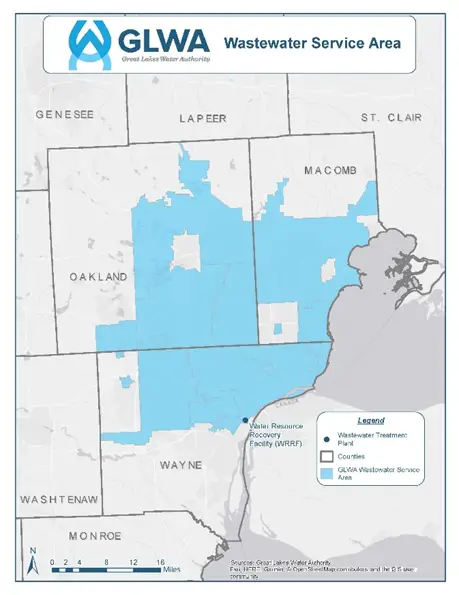
The proposal targets the GLWA (Great Lakes Water Authority) service area, encompassing major portions of Wayne, Oakland, and Macomb counties and affecting the Clinton, Detroit, Huron, and Rouge watersheds. The team aims to shift from isolated, community-specific operations toward integrated regional solutions that leverage shared assets more strategically.
The project’s three central goals are:
- Identifying operational, technical, financial, regulatory, political, and social barriers that impede regional stormwater cooperation.
- Examining successful examples of regional stormwater and wastewater coordination nationally and globally, and analyzing their relevance to Michigan’s context.
- Developing actionable strategies and models to overcome local barriers, informed by real-world engineering realities and stakeholder engagement.
A distinctive feature of the project is its integration with active practitioners and stakeholders. The team will conduct extensive interviews, technical and community roundtables, and meetings with both system operators and affected residents, ensuring solutions are not only innovative but truly implementable.
Tasks include cataloging obstacles to cooperation, reviewing best practices from areas outside Michigan (such as shared stormwater permit models in other states), and piloting promising concepts—such as real-time control of flows or dynamic agreements among municipalities—potentially saving hundreds of millions in infrastructure costs.
The effort will be tightly coordinated with ongoing regional initiatives, including the GLWA’s Long-Term Control Plan and SEMCOG’s infrastructure planning, and will tap into the robust expertise and networks of southeast Michigan’s leading water agencies and universities. Emphasizing community engagement, the project will also draw on the lived experience of disproportionately impacted neighborhoods through formal advisory groups and public roundtables.
Broader Impacts
By developing pathways to scale proven operational innovations and optimization, the project will foster solutions that advance environmental justice, improve water quality, enhance climate resilience, and demonstrate a blueprint for other Great Lakes or U.S. metropolitan regions facing similar challenges. Through piloting new models and overcoming longstanding institutional barriers, it aspires to help the region serve as a national leader in regionalized, integrated water management.
Funder: Erb Family Foundation
Partners: University of Michigan, Wayne State University and Michigan State University
Budget: $500,000
Period of Performance: 2023-2026